

🌍 Astrud Gilberto: The Voice That Conquered the World
🌍 Astrud Gilberto: A voz que conquistou o mundo

The shy housewife who stepped up to a microphone in 1963 and, without knowing it, introduced bossa nova to the planet. A dona de casa tímida que se aproximou de um microfone em 1963 e, sem saber, apresentou a bossa nova ao planeta.
An Unlikely Star

The story of Astrud Gilberto is one of the most improbable and beautiful in the history of popular music.
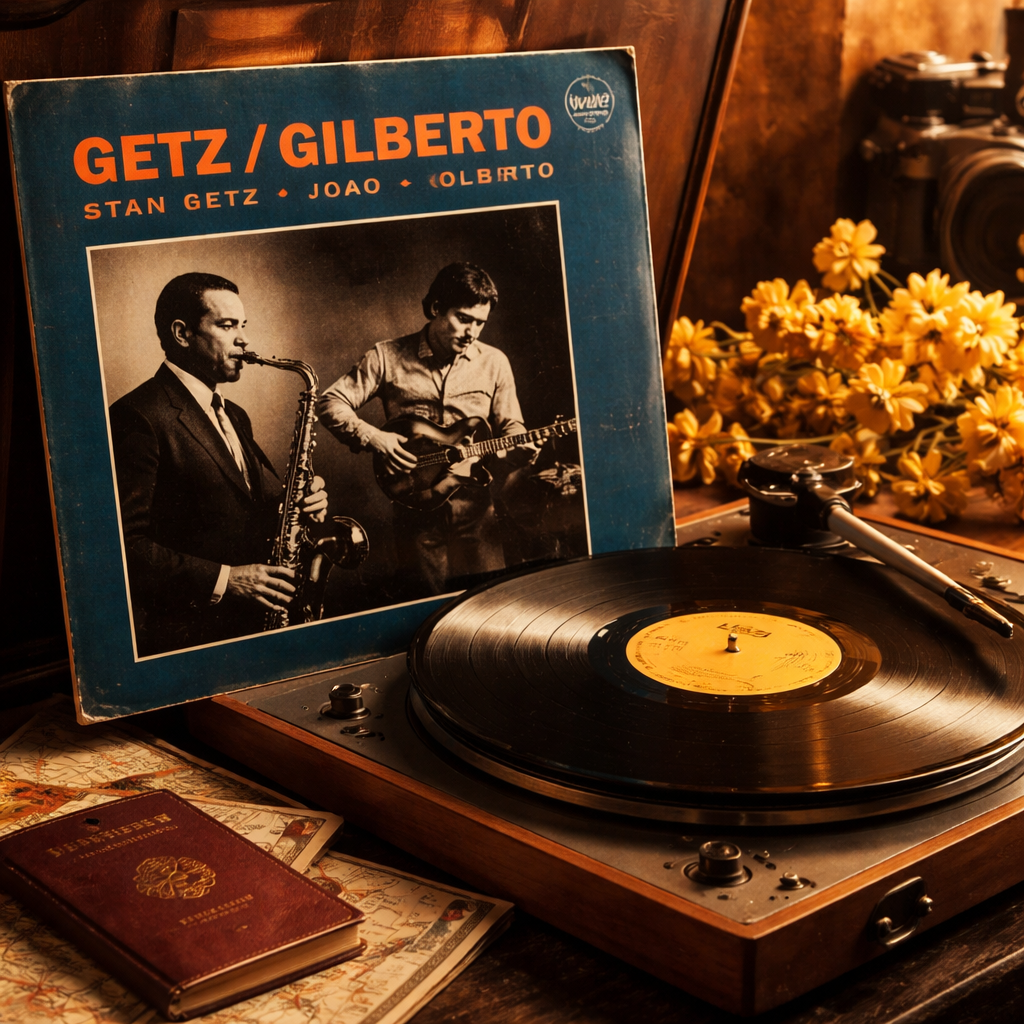
In 1963, a shy young Brazilian woman named Astrud Gilberto was accompanying her husband, João Gilberto, on a recording session in New York. The session, a collaboration between João, the American saxophonist Stan Getz, and the composer Antônio Carlos Jobim, was producing the album that would become the best-selling bossa nova record of all time: Getz/Gilberto.
There was only one problem. The song “The Girl from Ipanema,” with its English lyrics, needed a vocalist. Stan Getz suggested that Astrud sing it. She had never professionally recorded before. She spoke only limited English.
She stepped up to the microphone and sang. The world would never be the same.
A Voice of Pure Simplicity

Astrud Gilberto’s voice was the very opposite of dramatic.
It was small, gentle, almost childlike in its purity. She did not belt, she did not embellish, she did not show off. She simply sang — clearly, softly, and with an emotional directness that was utterly disarming.
This simplicity was her genius. “The Girl from Ipanema,” sung in her gentle, slightly accented English, became one of the most recognizable and beloved recordings in the history of music. It is among the most covered songs of all time, but no version has ever quite captured the magic of that first, unassuming take.
A Success She Never Expected
Astrud Gilberto became an international star almost overnight — though she never fully embraced the role.
“Garota de Ipanema” and “Corcovado,” both from the album, became global hits. Astrud was suddenly famous, touring the world and recording her own albums. Her soft, intimate voice made her a beloved figure in the United States, Europe, and Japan.
But her success came with complications. She received little credit or financial recognition for her contribution to the historic album in its early years. She performed songs that were, at first, not her own compositions, and she navigated the challenges of being a woman in a male-dominated music industry.

The Independent Artist
Despite these difficulties, Astrud Gilberto built a remarkable career.
She recorded numerous solo albums, exploring bossa nova, pop, and jazz. She wrote songs and even her own lyrics. She collaborated with influential figures in American jazz and pop, bringing bossa nova deeper into the American musical mainstream.
In later years, she took greater control of her music and her image, speaking openly about the inequities she had faced and asserting her rightful place in the history of the genre.
An Icon Forever
Astrud Gilberto passed away in 2023, at the age of 83.
Her death was met with tributes from around the world, honoring her as one of the most important voices in the history of popular music. Musicians and fans alike recognized that her gentle, unassuming performance had changed the course of music history.
Her version of “The Girl from Ipanema” remains a permanent treasure of world culture — a song that, in under three minutes, captures the very essence of bossa nova and the allure of Brazil.
The Quiet That Shook the World
Astrud Gilberto never tried to be a star. She simply was one.
Her story reminds us that sometimes the most extraordinary things emerge from the most ordinary moments — a shy woman stepping forward to sing a song, unsure of the words, unaware of the destiny that awaited her.
Her voice, small and gentle, ended up speaking to the whole world. And in that voice, the world heard something it had been waiting for: the sound of Brazil, in all its beauty, intimacy, and grace.
🇧🇷 RESUMO EM PORTUGUÊS (3-4 parágrafos)
A história de Astrud Gilberto é uma das mais improváveis e belas da história da música popular. Em 1963, uma jovem brasileira tímida acompanhava seu marido, João Gilberto, numa sessão de gravação em Nova York. A sessão, colaboração entre João, o saxofonista americano Stan Getz e o compositor Antônio Carlos Jobim, produzia o álbum que se tornaria o disco de bossa nova mais vendido de todos os tempos: Getz/Gilberto.
Havia um problema: “Garota de Ipanema”, com letra em inglês, precisava de uma vocalista. Stan Getz sugeriu que Astrud cantasse. Ela nunca tinha gravado profissionalmente e falava inglês limitado. Ela se aproximou do microfone e cantou — o mundo nunca mais seria o mesmo. Sua voz era o oposto exato do dramático: pequena, suave, quase infantil em sua pureza. Ela simplesmente cantava, com clareza, suavidade e uma direção emocional desarmante.
“Garota de Ipanema”, cantada em seu inglês suave e levemente acentuado, tornou-se uma das gravações mais reconhecíveis da história da música. Astrud virou estrela internacional quase da noite para o dia, mesmo sem nunca abraçar totalmente o papel. Mas o sucesso trouxe complicações: recebeu pouco crédito e reconhecimento financeiro pelo álbum histórico nos primeiros anos. Apesar disso, construiu uma carreira notável, gravando álbuns solo e colaborando com nomes do jazz americano.
Astrud faleceu em 2023, aos 83 anos. Sua versão de “Garota de Ipanema” permanece um tesouro permanente da cultura mundial — uma canção que, em menos de três minutos, captura a essência da bossa nova e o encanto do Brasil. Sua história lembra que às vezes as coisas mais extraordinárias emergem dos momentos mais comuns — uma mulher tímida que se aproximou de um microfone e, com uma voz pequena e suave, falou com o mundo inteiro.