🌍 Bossa nova em casa: A revolução da sala de estar
A quiet musical movement that began in living rooms proved that change does not always need to be loud. Um movimento musical silencioso que começou nas salas de estar provou que a mudança nem sempre precisa ser barulhenta.
The Most Important Rooms in Brazil
History is usually written about the grand and the loud — battles, revolutions, stadiums, halls of power.
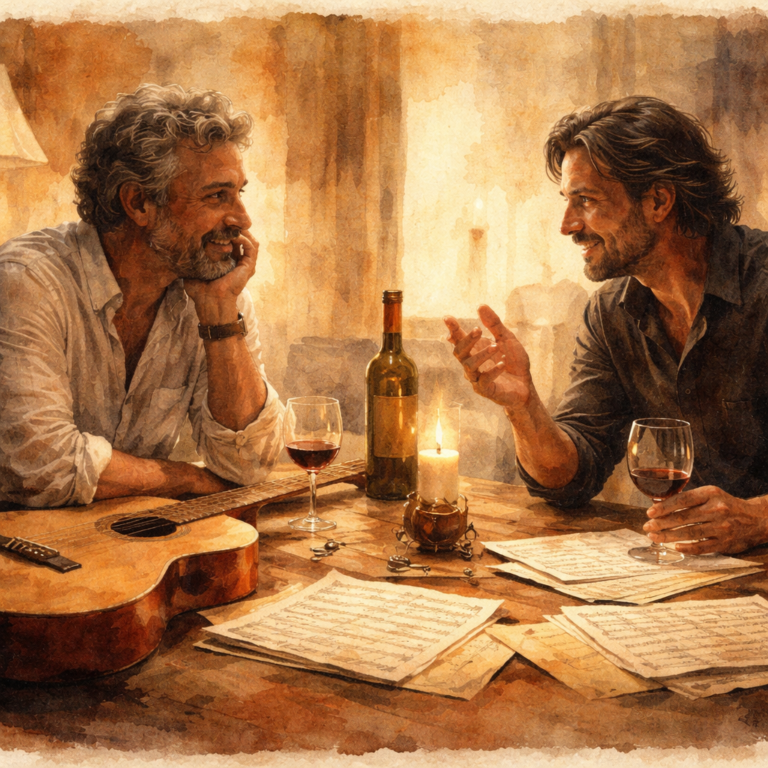
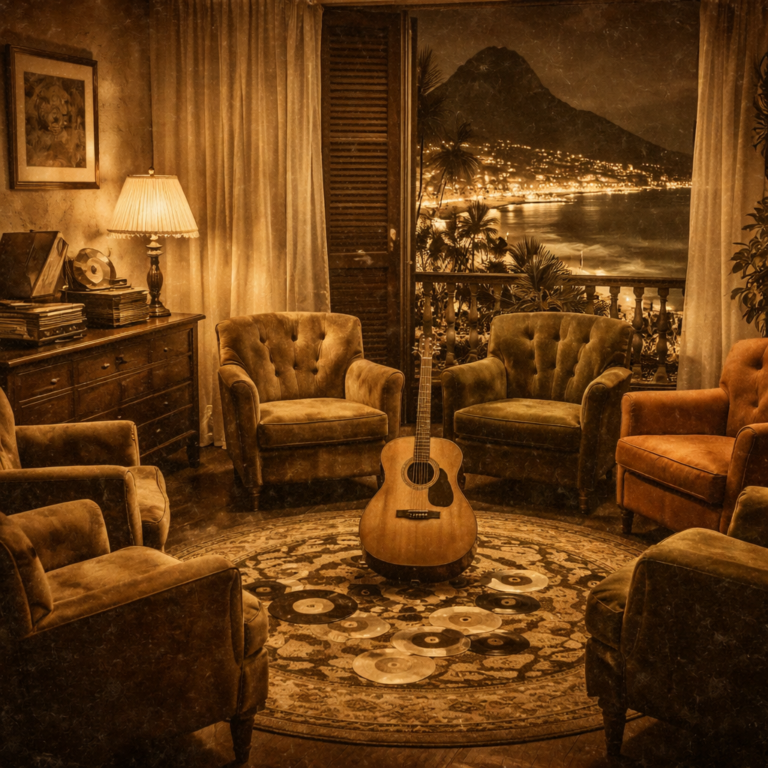
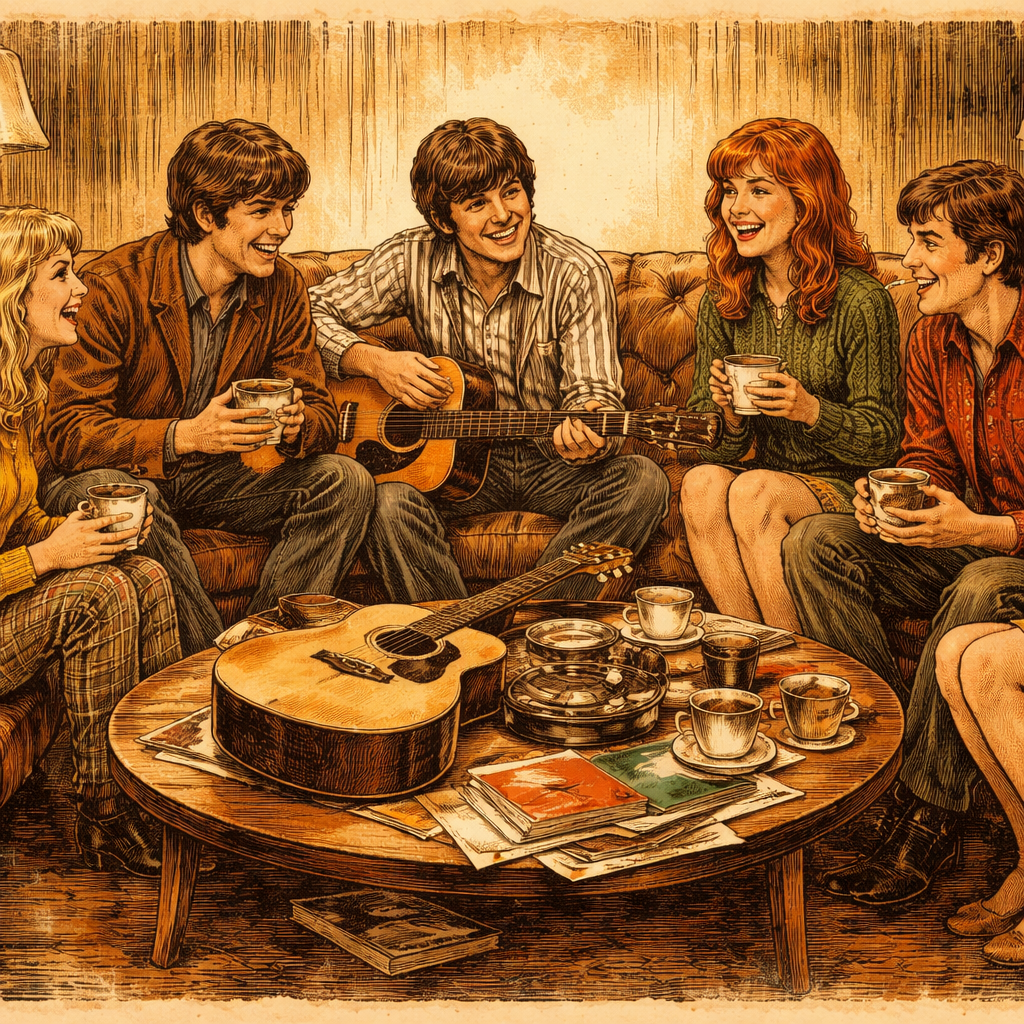
But one of the most important revolutions in Brazilian culture began in the smallest and most humble of stages: the living rooms of Rio de Janeiro. Bossa nova was born not on a concert stage, but on comfortable sofas, around coffee tables, in the intimate circles of friends and fellow musicians.
These unassuming rooms became the birthplace of a sound that would conquer the world.
The Gathering of the Circle

In the late 1950s, the apartments of Copacabana became the meeting places of a new generation of musicians.
Young artists in their twenties — Antônio Carlos Jobim, João Gilberto, Vinicius de Moraes, Carlos Lyra, Roberto Menescal, Nara Leão — gathered in living rooms to share new compositions, experiment with harmony, and debate the future of Brazilian music.
Nara Leão’s apartment in particular became legendary. There, on the simple sofas of Copacabana, some of the most important conversations in the history of Brazilian music took place. The intimacy of the setting shaped the intimacy of the sound.
The Sound of the Small Room
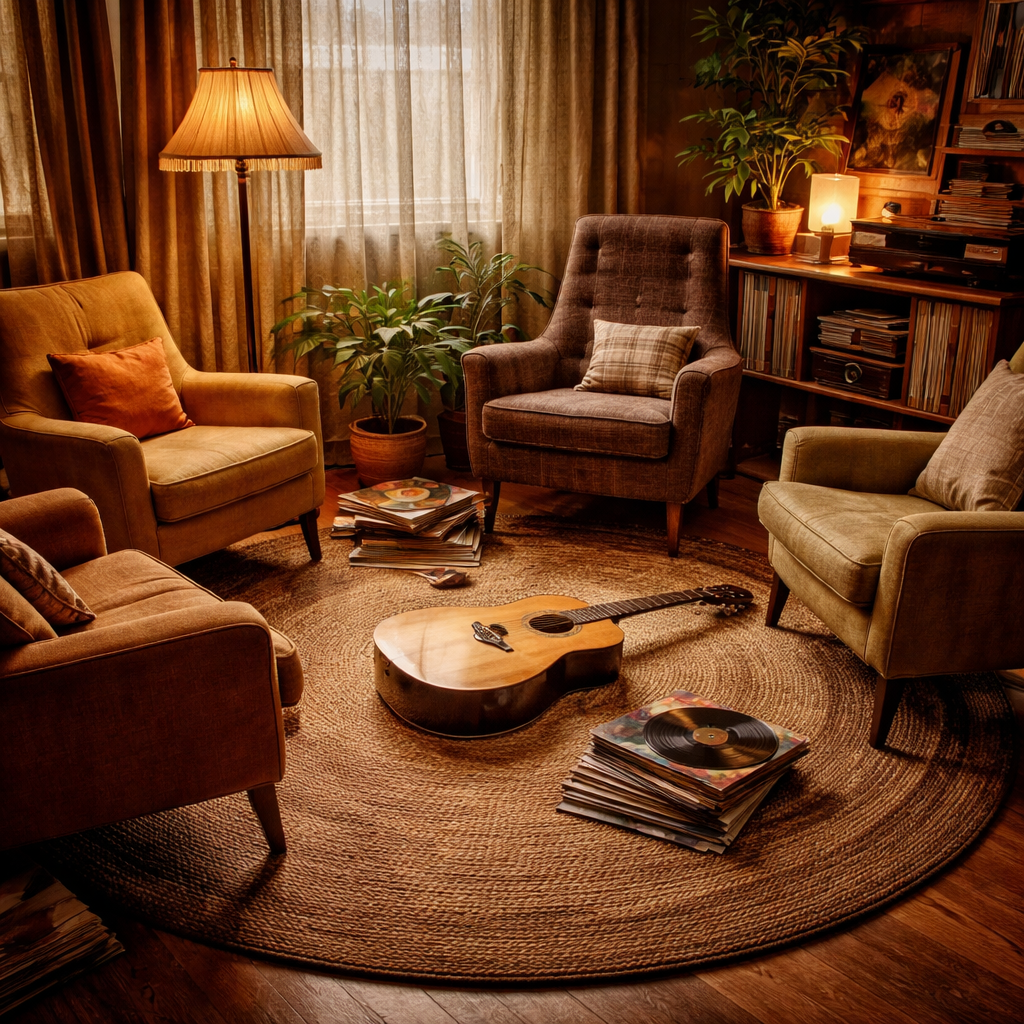
The bossa nova aesthetic was born from the constraints — and the virtues — of the living room.
In the grand concert halls, musicians had to project. In the small living room, they had to be precise and subtle. With no walls of amplification, the music had to find its own balance. The result was a sound of hushed intimacy — a music designed to be heard up close.
The revolutionary guitar style of João Gilberto, quiet and rhythmic, was developed in part because it suited the intimate spaces where the music was being created. The gentle pulse of the shaker, the soft contours of the voice — all of it was shaped for close listening.
The Circle of Creation
The living room was more than a venue. It was a creative laboratory.
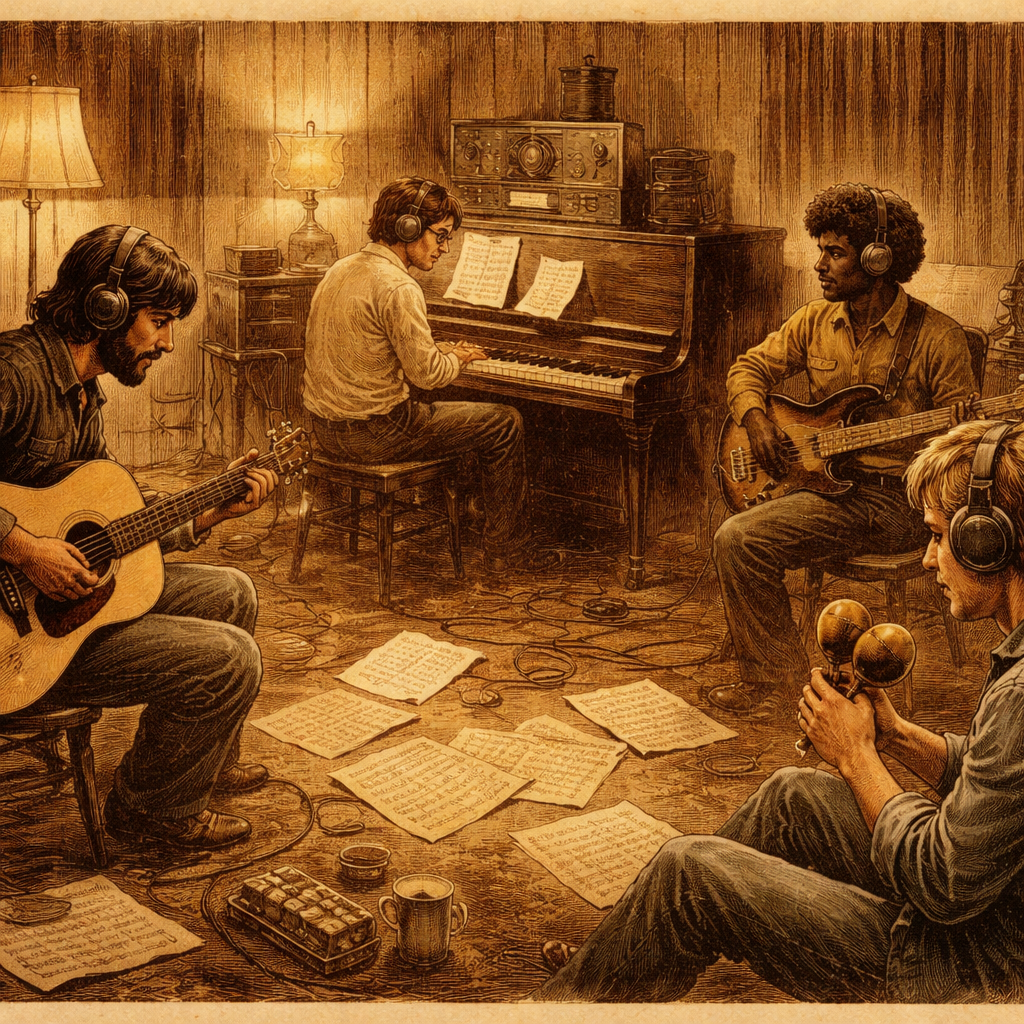
In these circles, compositions were refined, harmonies tested, and techniques shared. Musicians could make mistakes, try new things, and receive immediate feedback from trusted peers. It was a space of experimentation without judgment — and without an audience to impress.
This collaborative, exploratory environment was ideal for the kind of radical innovation that bossa nova represented. The genre was born not from competition, but from the shared excitement of a small group of friends exploring something new together.
The Quiet Revolution
The revolution of bossa nova proves that great change does not always announce itself loudly.
While stadiums and stages captured the grand gestures of other movements, bossa nova transformed Brazilian music from within the quiet rooms of homes. It changed how Brazilians listened, how musicians played, and how the world heard Brazil — all from the intimacy of the sofa.
It was a revolution of whispers, not shouts. A revolution of refinement and precision, not noise. And perhaps that is why its influence has proven so lasting.
The Living Room Lives On

The living room revolution never truly ended.
To this day, the roda de samba and the informal musical gathering remain at the heart of Brazilian music. And every home where someone picks up a guitar to play a bossa nova standard is a descendant of those first gatherings in Copacabana.
Bossa nova reminds us that the most intimate spaces can be the most revolutionary. Sometimes the future is born not in the grand hall, but in a quiet corner of a living room, among friends, sharing a song.
🇧🇷 RESUMO EM PORTUGUÊS (3-4 parágrafos)
A história geralmente é escrita sobre o grandioso e o barulhento — batalhas, revoluções, estádios, salões de poder. Mas uma das revoluções mais importantes da cultura brasileira começou no menor e mais humilde dos palcos: as salas de estar do Rio de Janeiro. A bossa nova não nasceu num palco de concerto, mas em sofás confortáveis, em volta de mesas de centro, nos círculos íntimos de amigos e músicos. Essas salas despretensiosas tornaram-se o berço de um som que conquistaria o mundo.
No final dos anos 1950, os apartamentos de Copacabana tornaram-se ponto de encontro de uma nova geração de músicos. Jovens artistas na casa dos vinte — Tom Jobim, João Gilberto, Vinicius de Moraes, Carlos Lyra, Roberto Menescal, Nara Leão — se reuniam nas salas para compartilhar composições, experimentar harmonias e debater o futuro da música brasileira. O apartamento de Nara Leão em particular tornou-se lendário.
A estética da bossa nova nasceu das limitações — e das virtudes — da sala de estar. Nos grandes salões, os músicos precisavam projetar. Na sala pequena, precisavam ser precisos e sutis. Sem paredes de amplificação, a música precisava encontrar seu próprio equilíbrio. O resultado foi um som de intimidade silenciosa — música desenhada para ser ouvida de perto. O estilo revolucionário de violão de João Gilberto, quieto e rítmico, foi desenvolvido em parte porque combinava com os espaços íntimos de criação.
A sala de estar era mais que um local: era um laboratório criativo. Nos círculos, as composições eram refinadas e as técnicas compartilhadas, num espaço de experimentação sem julgamento. Esse ambiente colaborativo foi ideal para a inovação radical da bossa. A revolução da bossa provou que a grande mudança nem sempre se anuncia em voz alta — foi uma revolução de sussurros, não de gritos, de refinamento e precisão. E talvez por isso sua influência tenha sido tão duradoura. A revolução da sala de estar nunca terminou de verdade — e toda casa onde alguém pega o violão para tocar um clássico da bossa é descendente daqueles primeiros encontros em Copacabana.